Memories of Union Station
You can scroll the shelf using ← and → keys
You can scroll the shelf using ← and → keys
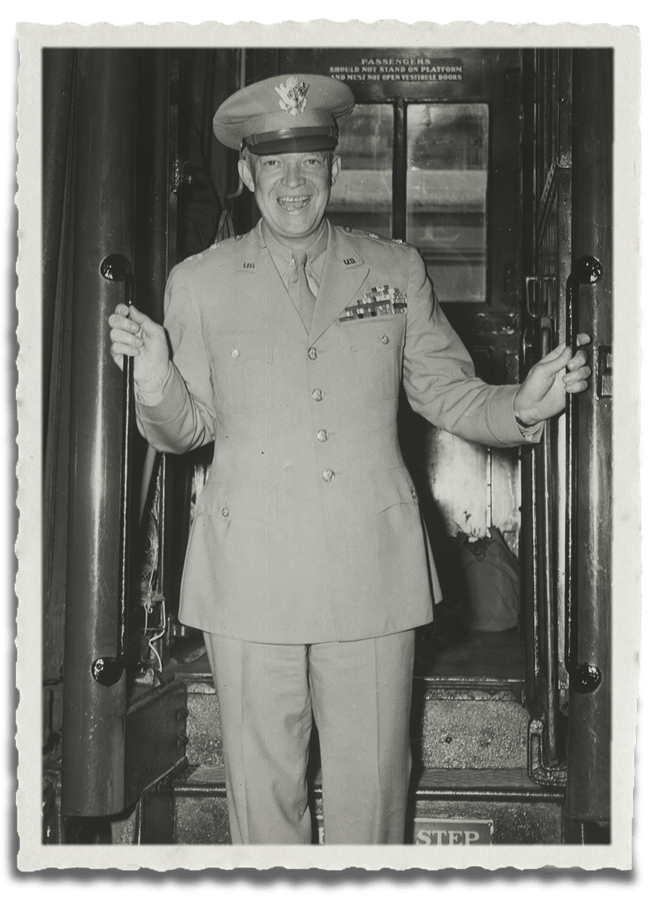
From the Dwight D. Eisenhower Library in Abilene, Kansas.
June 21, 1945 — arrived in K.C., MO. By train, enroute to Abilene, Ks. MDE, DDE, and family by special train.
June 23, 1945 — return to K.C. by train from Abilene. MDE and DDE boarded private car for trip to Wash., D.C. (Arr. DC on June 25).
Sept. 12, 1946 — trip from Washington, DC (left on Sept. 11) to Abilene, passes through K.C. on Sept. 12.
July 15, 1950 — New York to Califomia trip, stop in K.C. on July 15; DDE’s train leaves K.C at 9:30 pm (Santa Fe Railroad.).
Sept. 17, 1950 — trip film Denver, Colorado to New York on Wabash Car #400. I assume this train passed through K.C. on Sept. 17 or 18.
Dec. 19, 1950 — New York to Denver trip and return. Dec. 19 Wabash train through K.C. at 9 to 9:30 pm. Dec. 26 — train leaves Denver for return to NYC.
June 4, 1952 — DDE took train from K.C. to Abilene (appointment books specify that he flew in to K.C., Ks. Airport but don’t specify at what depot he boarded the train for Abilene).
Sept. 19, 1952 — Campaign Train, arrived at Union Station, K.C., Mo. at 3:45 pm and left K.C at 7:20 am on Sept. 20 (Missouri Pacific Railroad).
1953-61 — Presidential Years. Eisenhower tended to fly everywhere and did not take the train very often.
May 1, 1962 — trip to Abilene (not sure of mode of travel)
July 1, 1963 — trip to Denver, arrived at K.C, Mo. at 8:30 pm and left K.C. at 10:50 pm (Santa Fe Railroad).
Nov. 28 to Dec. 2, 1967 — trip to Abilene and on to California, traveled by train through K.C.
This is definitely not a complete list of all occasions when DDE passed through K.C. by train. We just don’t have documentary evidence on the period from 1914 to 1945.
In March, 1919, at the age of 13 I left Collbran, Colorado with my parents and twin sister to make our home in Missouri. My parents were originally from Iowa and Nebraska but had moved to Colorado where my paternal grandfather lived. It was my parents’ belief he had moved there from Iowa because he was homesick for the mountains of Norway where he was born.
My grandfather died, my older brother and sister were gone from home, and my parents decided they wanted to get their twin daughters out of the rugged life of western Colorado. Land was cheaper in Missouri than in Iowa.
On March 17, 1919 we left Collbran. The snow came close to covering the tops of the fence posts when we left and there the the snow was seen up on the Peninsula. As we left I turned at the bend of road and saw our home up there. It looked pretty forlorn sitting at the head of the Peninsula, snow all around it.
My uncle took us and a few belongings my folks had packed to De Beque, Colorado where we boarded the train that night about 8 p.m. My sister, Mildred, and I had our hair done in rags to go on the train, and Mother took those rags out and our hair was done in curls to board the train.
We were very, very thrilled to ride on the train. About daylight the next morning we went through the Royal Gorge. My mother awakened us so we could see it. The train was far, far below and we looked up but were un-impressed. We had lived in scenery so beautiful all of our young lives that the Royal Gorge was just another big canyon to us. When we arrived in Kansas we could not believe land could be so flat and we marveled at the green wheat fields after having left so much snow in Colorado.
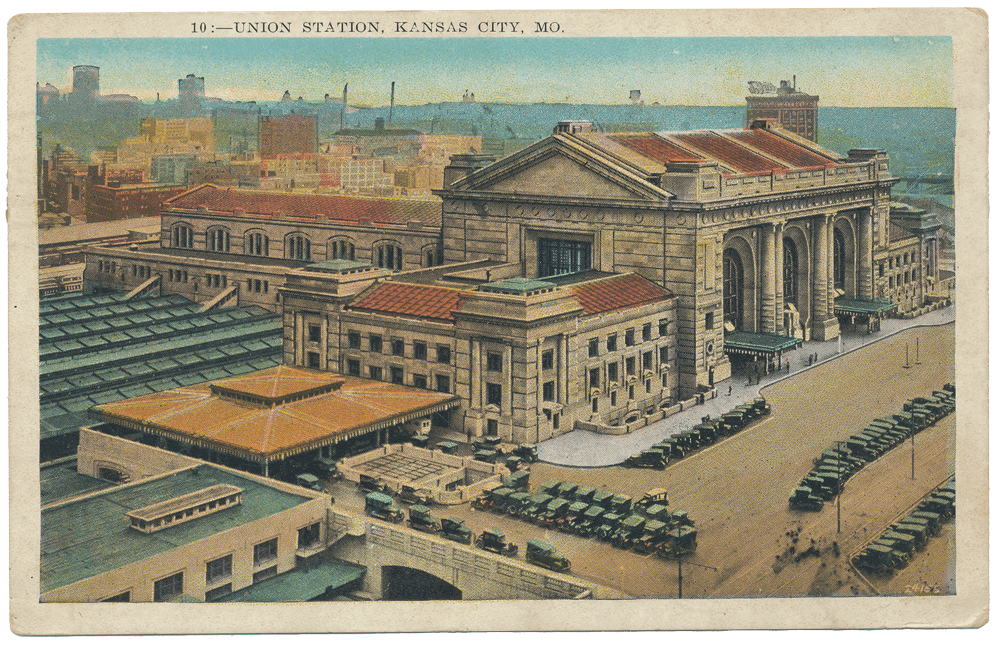
About seven o’clock on the second morning of our journey the train came into the Union Station in Kansas City.
What a sight that was to us; that huge city and the railroad tracks everywhere and then the beautiful, beautiful Union Station. We were so impressed we were really beyond words.
Never, never will I forget the sight of that beautiful Union Station. It was bustling with people coming and going, and we couldn’t imagine that many people. I was quite impressed that my parents seemed to know exactly what to do. I observed my father shaking his head at vendors peddling their wares. There were huge apples for sale. It was a huge building but warm and inviting, spotlessly clean.
Mother told Dad about the first thing we had to do was to get himself and us twins a hot breakfast. So Dad took us to a snazzy restaurant. The potatoes were so greasy we didn’t eat much of them, and I think we didn’t eat all the breakfast we should have. Mother stayed with the luggage and I suppose she ate later on.
It now seems ironic and an interesting parallel that we would be relatively unimpressed with the Royal Gorge yet awed by the Union Station. The latter represented a unique kind of beauty to which we were unaccustomed.
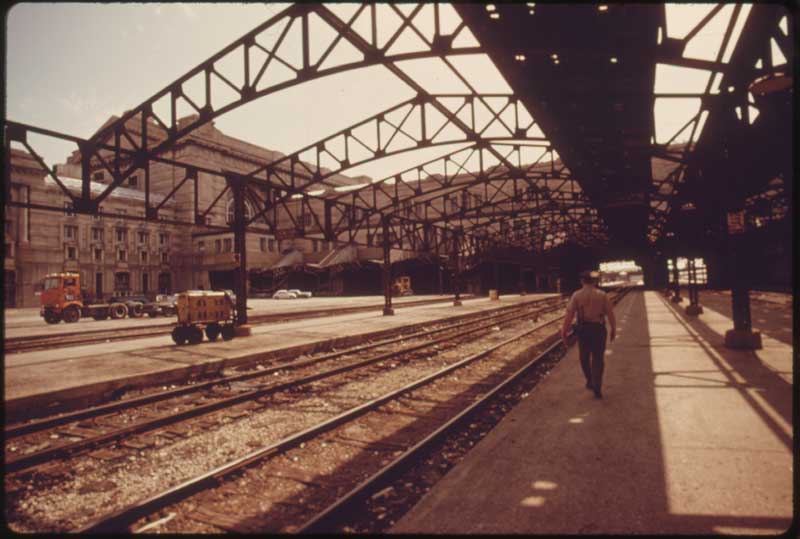
In 1992, at 7 a.m., from a compartment on Amtrak’s Southwest Chief, I awoke to see the Union Station at Kansas City for the first time — looming above me, but grander than any station I’d ever seen.
Perhaps this was my imagination, as it was boarded up, behind a wire fence, deserted and shrouded with mystery.
A year later on the same journey, l made sure I was dressed and out of bed for this stop, but found myself unable to cross that fence or see anything more. For two years I’ve thought about this structure, about how America could possibly lose something as grand as this, and worried about its future.
This summer I took my 80-year-old Dad from Oregon back to his family home in Ottawa, Kansas, so our first Kansas stop was to the Union Station in Kansas City. We parked in front, among signs and rubble, yet I was not disappointed at all. This building is why people study architecture and truly represents a crowning achievement of man. Yet past the boarded up doorways, I saw a man emerge from an open one. It couldn’t be possible, but I asked anyway. With his permission, we spent the next hour inside — in awe, in tears, in dismay. Dad walked fo the gate marking the train which could have taken his family to Ottawa in 1918 and also found the train that might have taken him on to Oregon in 1936. The signs were all there, the destinations still marked, and, for a moment, the trains with names somehow came back to life again. I turned and walked back towards the great hall, imagining myself a farm-boy, arriving in Kansas City for the very first time.
A railroad man once told me that stations were for “first impressions.” I could see he was right. With a station like this, Kansas City must truly be a wonderful place. ls it possible that the memory of that moment might affect a man every day, in subtle ways, causing him to give a city the respect it needs and deserves? You sure don’t get that feeling from airports and freeway off-ramps!
In Ottawa we found that the citizens had turned their station into a museum and the home of a model railroad club. En route home, a native told me that you have a 10-year plan to renovate your station as well. Given the inspiration I’ve received, l’d like to contribute in a small way to this effort. Any information on your plans will certainly be appreciated. I look forward to the day when I can arrive on a “chief” and see that hal/ in all its glory once more!
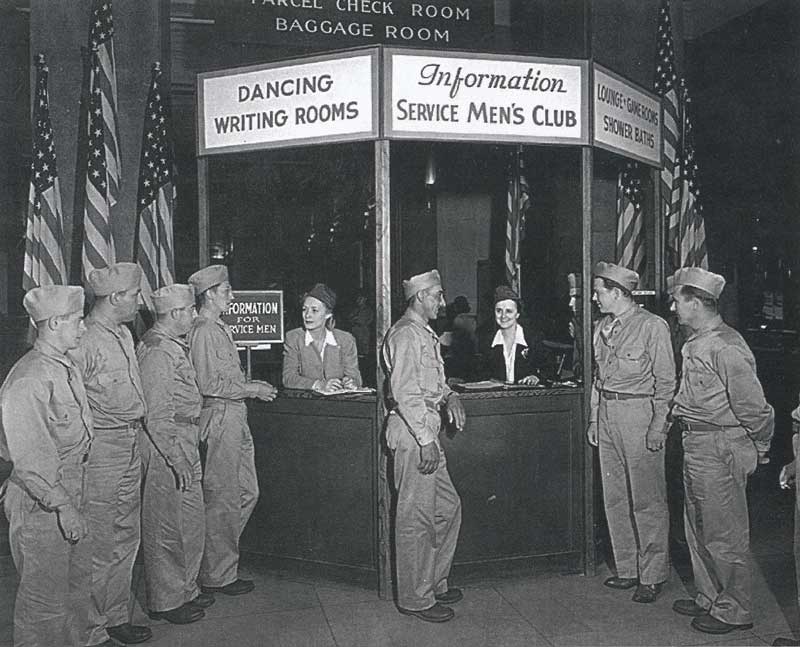
l first walked into Union Station the night of February 13, 1945, having just arrived from Pratt, Kansas on the Chicago, Rock Island and Pacific Railroad. I was a 21-year-old corporal in the Army Air Force with a treasured three-day pass in my pocket and a lump stuck solidly in my throat. I was there to meet my girlfriend, a red-headed SPAR from Illinois named Jean who was on furlough from duty with the women’s Coast Guard in Washington, D.C. It was my conviction that Jean was the girl with whom l wanted to spend the rest of my life — and I intended to take this chance to ask her to marry me.
I found Jean at the Travelers’ Aid desk, and very shortly we had walked to the park that still sits across the street from the station.
We strolled up a hill and talked well into the night. We each got a room at a hotel nearby. It was in that hotel, in the early hours of Valentine’s Day that Jean agreed to wear my engagement ring. I didn’t have the ring with me, though, I later sent Jean the money to buy a ring.
I still have the ticket that took me to Union Station that day–and I still have that red-headed SPAR from Illinois–after more than 53 years of marriage. We settled in Fort Worth, Texas, where we have raised three children.
When I was 19 years old, I spent one entire night in the ladies lounge at the Union Station. It was February, 1943. I was a student nurse at Research Hospital, 2200 Holmes, in Kansas City. My steady boyfriend had finished basic training at Great Lakes Navel Training Center and was coming home for a weekend before returning for further training. We were thinking about getting married.
The train from Chicago was due very early in the morning of February 18, 1943, and I wanted to be there to greet him so, after the 10 p.m. bed check in the nurses’ dormitory, I sneaked out and walked the dirt path down Signboard Hill to Union Station (The Crown Center Plaza Hotel stands there now).
I spent the night curled up sleeping on a bench in the ladies restroom and, when the train arrived about 5:00 a.m., I was there to greet my future husband.
The next day we rented a car and drove to Olathe, Kansas, where we were married by the Justice of the Peace. Nurses were not allowed to be married in those days, so we kept our marriage a secret for six months. Then I left nurses training and joined my husband on the east coast for submarine training in New London, Connecticut. The marriage lasted until my husbands death in a traffic accident in 1971.
When we were students in Oak Grove, Missouri, high school, the place to go after the senior prom was Fred Harvey’s Restaurant at Union Station. Four of us did this in 1941 and, when we were ready to go home, my date’s car wouldn’t start so we pushed it until it did. Unfortunately, I stepped on the hem of my beautiful prom gown and tore it badly.
I will always remember where I was when I heard that President Rooselvelt had died — picking up luggage at the Union Station after traveling home from the east coast.
The Union Station holds a very special place in my memory…
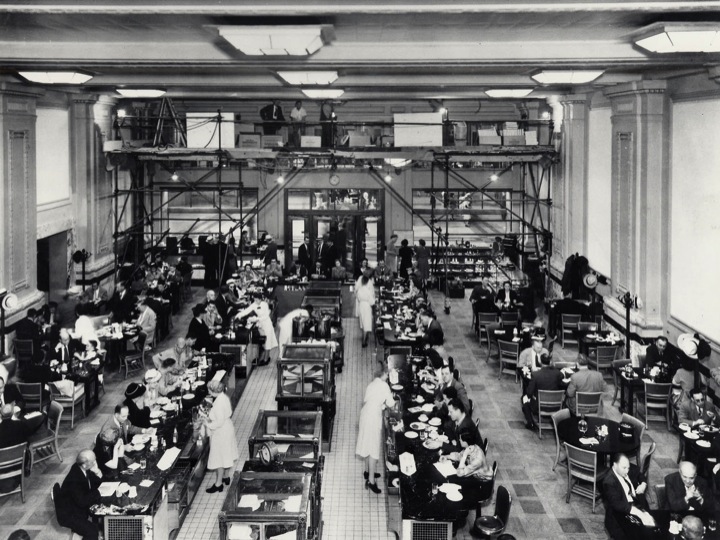
In 1952, I went to work as a Red Cap in Union Station. In 1960, I began working in the ticket office. In the spring of 1956, someone told me there was a new waitress working at Fred Harvey. I went over there and sat at the horseshoe counter and ordered bread pudding (it was the best I have ever eaten!). The new waitress waited on me and, when she got off work, I met her in the lobby and walked her to the bus stop. I did this almost every night until we got married on November 30, 1957. My wife, Rita, worked until February 1958 when we started our family.
We have 4 sons and ll grandchildren. Our life started at the Union Station, and we have a lot of good memories. I worked in the ticket office at Union Station until my retirement in 1989.
Being 88 years of age I might be the only living eyewitness to the famed Union Station Massacre of the early thirties.
I was Assistant Manager of the Fred Harvey Gift and Newsstand on that fateful day a convicted felon named “Nash” was brought through the station to be transferred by auto to the United States Prison at Leavenworth, Kansas.
I and some others followed the procession to the entrance to the depot. Nash was put in the front seat of a car. About that time all hell broke loose as Pretty Boy Floyd and a cohort were waiting with machine guns ready to fire. Nash was killed along with several officers. The cops had no time to draw pistols. A gory mess ensued. Some stray bullets hit the front of the station. The indents are there still…
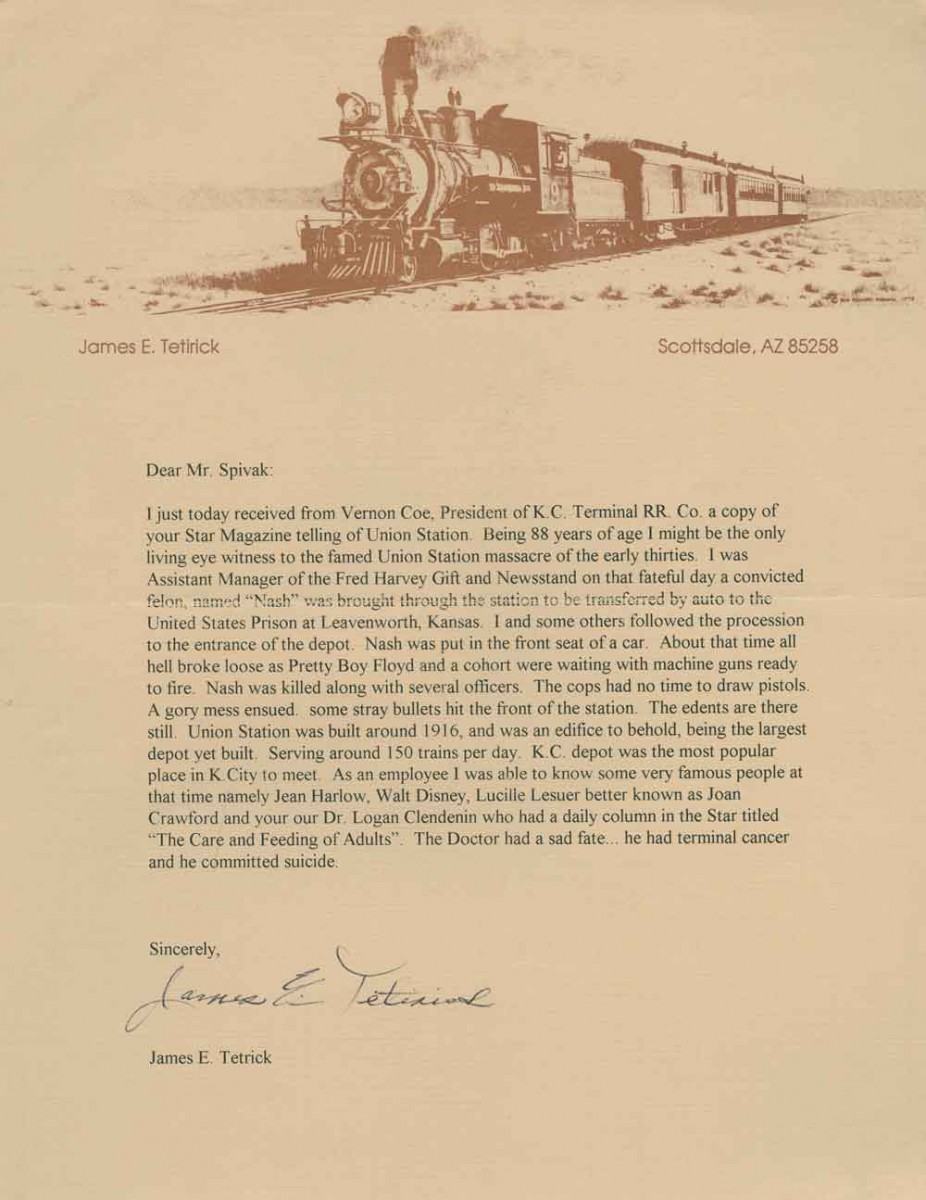
As an employee I was able to know some very famous people at that time, namely Jean Harlow, Walt Disney, Lucille Lesuer (better known as Joan Crawford), and our own Dr. Logan Clendenin who had a daily column in the Star titled “The Care and Feeding of Adults.”
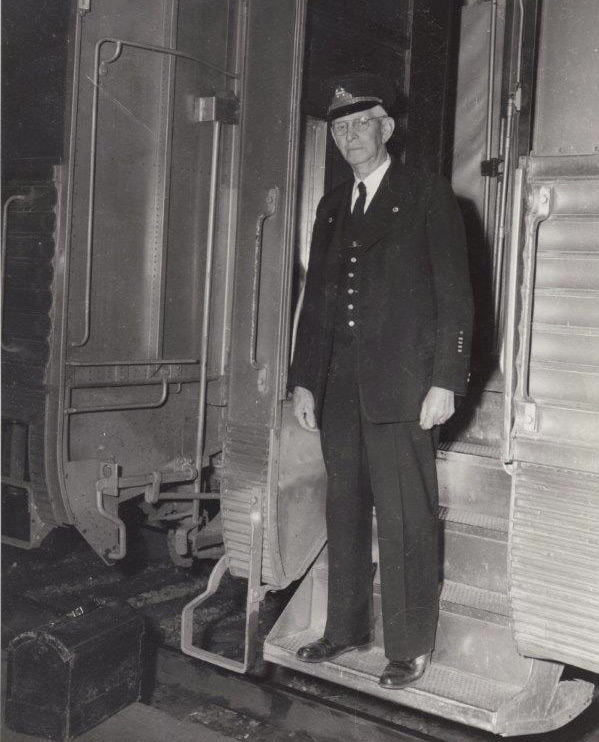
For the railroad industry, Union Station meant booming business and celebrated careers; R.P. John enjoyed 50 years on the railroad.
John was the conductor for the Santa Fe Chief. His careers began in 1905 when he was looking for work, and his passion for the railroad would inspire a legacy. Of all seven children, he had four sons that worked for the railroad, two who became conductors for Santa Fe, and one daughter who was married to a Santa Fe break man.
At 76, R.P. John conducted his last ride from Newton, KS and removed his conductor’s hat from his snow-white head, and ended a celebrated career that would continue through his children’s work.
For John and his family the railroad represented opportunity and tradition, as they remained employed by Santa Fe/BNSF for 100 consecutive years.
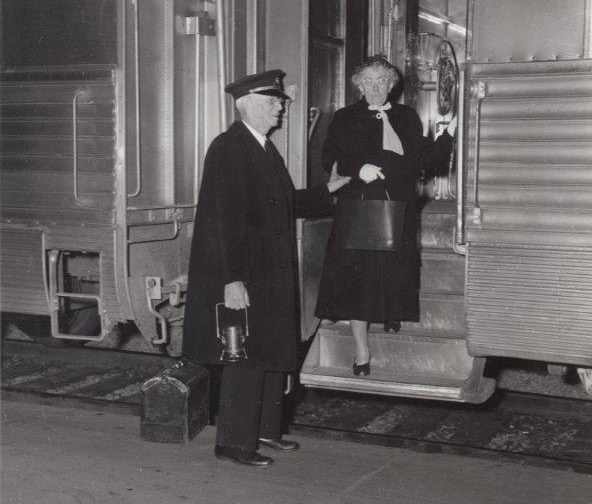
R.P John on his last ride from Newton, KS
The Union Station holds very special childhood memories for me through the mid 1950’s-1960’s.
My dad, Dr. Graham Owens, had his office there so we spent many Saturdays “going to the office” with dad. The BEST memories though were having train tickets out west. We would often travel either to Pasadena, CA where my mother grew up….or to Spokane, WA to visit my dad’s sister, Jean Owens Brown. Either way, getting on that evening train at the beautiful bustling Union Station was always exciting.
And who wouldn’t look forward to two nights in a Pullman, with a dome car, fine dining on the Union Pacific while riding through the beautiful Rocky Mountains?
Thank you for celebrating the history of a wonderful building, full of history and so important to Kansas City!!
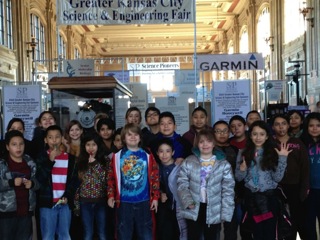 Union Station serves as a hub for transportation and innovation. Annette Bright and Peggy DeSure are two teachers from Frances Willard Elementary, and for the past two years have organized an after school science club for their students. The goal is prepare students for the Greater Kansas City Science Fair at Union Station.
Students spend three months preparing for the fair by working on their own original inventions. By the time student’s load on the bus with their work, they are ready for an exciting opportunity.
Not only do the students enjoy comparing their work to other Kansas City student’s but Union Station serves as an exciting distraction.
“They are so impressed by the architecture and the setup of Union Station that we have to watch them to make sure they don’t run into each other or the walls because they are walking around with their mouths agape and not paying any attention to where they’re going” Bright said.
The Science fair provides students with an opportunity to explore and innovate outside of the classroom, it also helps in affirming their skills with other Kansas City schools.
The hype of the Science Fair has become so great, that students wait all year.
“The students start asking us in August if we are going to have the Invention Club again and they are thinking about their ideas from the minute we tell them we are going. I know that their parents take them down to the Station to see their projects, which then gets the parents interested in other things there are to offer, like Science City or the special exhibits “Bright said.
Union Station’s educational initiatives bridge the gap between the classroom the real world.
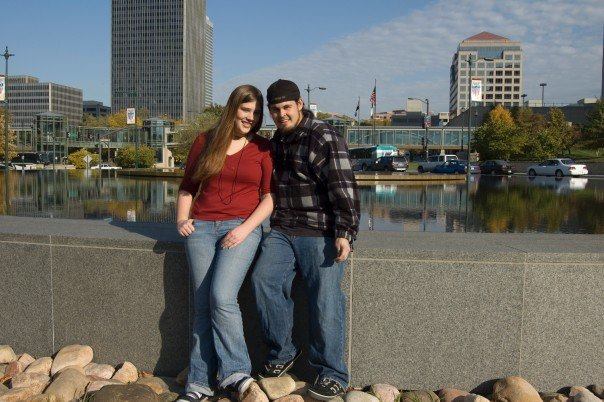
Union Station is full of exciting memories for many of its employees. Volunteer Coordinator, Rebekah Canales has a special connection to Union Station. For her first date, with her now husband Kenan, they had planned on going to Science City. They were in for an unfortunate surprise, it was closed when they got there.
“Poor guy was so nervous and embarrassed” Rebekah said.
That night they opted for a night under the stars at the Planetarium, and a year and a half later Rebekah received another surprise. After another exciting evening at the Planetarium, Kenan proposed!
Years later, Rebekah was excited to take a job as a part-time volunteer coordinator. Working at Union Station allows Canales to relive her favorite memories every day.
“Its hare to have a bad day here” Canales said.
Canales has enjoyed three years of making friends and spending her time surrounded by exciting exhibits and passionate people.
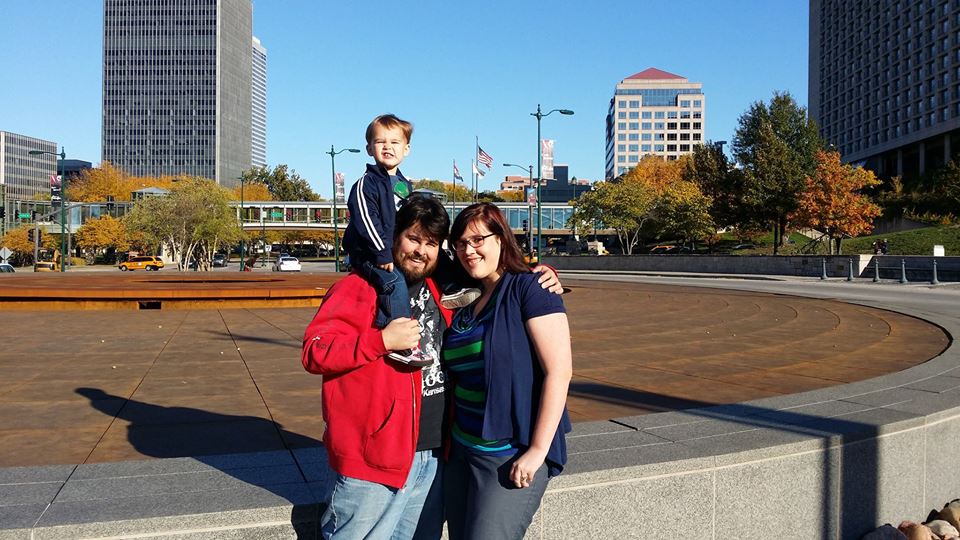
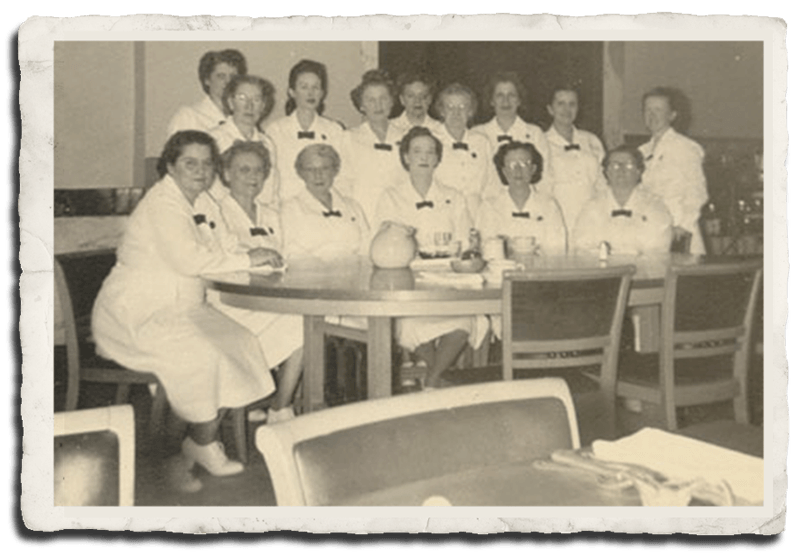
Union Station has remained a dining destination for everyone in Kansas City. Dee Rathbun arrived in Kansas City for a US Army physical in 1960 after being selected by the Draft Board in Lincoln Kansas. While staying at the Armed Forces Building located near Union Station he enjoyed meals from Fred Harvey’s.
“For a Kansas Farm Boy 200 miles west of Kansas City this was a very big and memorable deal,” Rathbun said.
Rathbun remembers walking over two-by-two with the other 100 men who were there for their military physicals.
Today, Rathbun enjoys volunteering at Union Station.
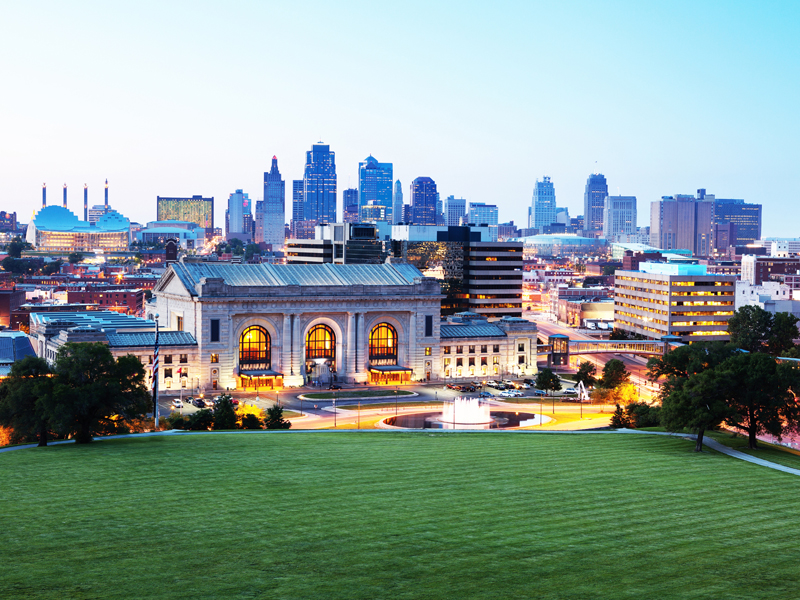
Union Station has provided volunteers the opportunity to connect with their community. For Janice Newton, a retired office employee, Union Station was the experience she had been looking for.
Six years ago, Newton began volunteering at Union Station after it was recommended to her by another volunteer. Newton remembers being interested in the Station after he friend seemed enthusiastic about her work.
Newton continues to enjoy her time at the Station.
“The beauty of the Station and the interaction with so many people is exciting and rewarding, I hope to continue being her for years ahead.” Newton said.
Newton is one of many volunteers that contribute to the successful day to day operations of Union Station.
On Tuesday afternoons, two friendly faces sit inside the information booth in the Grand Hall of Union Station. Under the tent, Hugh and Eileen greet guests and tourists, answering questions and giving advice. Eileen started as a volunteer in 2007 after growing up in the heart of New York.
Volunteering never grows old for Eileen and Hugh, “it is inspiring, everyday it is something new” Eileen said.
Hugh has been a volunteer at Union Station since 2004. He remembers visiting the Station in 1944 when train traffic was at an all-time high.
“This place was just jumping,” Hugh said. Today, he has met visitors from over 16 countries during his years of volunteering.
Volunteering has provided an exciting and priceless opportunity for Hugh.
“If they started charging me to volunteer here, I’d pay. I love it here,” Hugh said.
The volunteers at Union Station are an imperative component to operations and provide insight and passion that make the Station exciting.
In 1913, the Federal Reserve Act began an initiate to expand their banks around the country. With Kansas City’s population doubling from 1900-1910, it became a contender for its own Federal Reserve Bank. In January of 1914, William McAdoo, the U.S. Treasury secretary, and David Houston, secretary of the Agriculture Department, arrived in Kansas City, Mo., to meet with bankers and business leaders from across the Midwest who supported Kansas City’s bid for a Reserve Bank.
What contributed to the booming population growth came from the railroad industry. During the time of their visit Union Station was under construction to make alterations and improvements to handle the growing number of people and baggage that was coming through the station. The presentation from Kansas City’s business leaders, which included information about the soon-to-open Union Station and other features of the city, impressed McAdoo and Houston, and several weeks later, the Reserve Bank Organizing Committee announced Kansas City would be one of 12 Federal Reserve Bank locations.
A story in The Kansas City Star about the Federal Reserve Bank of Kansas City’s opening on Nov. 16, 1914, made a connection between the committee’s selection and Union Station. The Star reported: “A $6 million Union Station with about $50 million for terminals built by the railroads, officially established Kansas City as the gateway or center for the transportation lines of the West and Southwest, and now the (Reserve) Bank officially establishes it as the center for the business and financial lines.”
In 2008, the Federal Reserve Bank of Kansas City reinforced this connection, moving to a new headquarters building at 1 Memorial Drive—a short distance from Union Station.
Boarding a train in 1966, Angelia Keller and her classmates from Westwood View Grade School were about to about to embark on a great excursion for a school trip to Chicago.
The 6th grade class was leaving for a week-long trip. While Chicago was full of sites and attractions like the aquarium and Chinatown, Keller remembers the thrill of leaving the station and experiencing the luxuries of train travel with the reclining chairs to sleep in and dining cart.
For Keller, this trip was a “great experience” she will never forget.
Mary Maxwell’s life in Kansas City began at Union Station. In January of 1955, Mary and her family arrived at Union Station from San Antonio, Texas. Maxwell recalled the fear and thrill of feeling the snow for the first time upon their arrival.
Later that year, Mary met her older brother for the first time at Union Station. He and his wife arrived by train and the Maxwell’s met them in the Great Hall. Mary remembers hiding under her mother’s skirt after seeing her “larger than life brother” who towered over her at 6’4”. Even today, she and her brother like to revisit memories by going to the station.
Maxwell also remembers Union Station at Christmas time as a magical experience. She and her family took the train to Mississippi from the Station to visit her grandmother. The carts of packages and bustle of the travelers enchanted her, as they would prepare for their holiday celebrations. Today, Maxwell shared this magic with her grandson and took him to see Santa Claus and the model train exhibit. Union Station remains a constant presence in her life in Kansas City and she looks forward to many more memories.